When Silence Speaks: A Mother’s Letter on Her Child’s Mental Health
When my daughter suffered from a kidney stone and experienced severe pain, I naturally turned to my relatives and friends for help and advice, along with medical treatment. The response was overwhelming, but in a positive way. Everyone came forward with suggestions, shared home remedies, recommended doctors, and even spoke about their own or their family members’ similar experiences. I made it a point to find out which doctor I should consult—the best doctor in this field—and which medicines had worked for others. Within a month, I was able to understand the root cause of the problem, the right remedies, the necessary precautions, and the dos and don’ts. I followed the advice carefully, and with the right treatment and support, my daughter recovered quickly. Throughout this time, she received immense love and care from everyone around. Even today, she talks openly with her friends about that phase of her life—the pain she went through and how she overcame it. After all, when we share our pain with others, we feel comforted and relieved. When we meet someone who has gone through the same struggle, we feel encouraged that if they managed it, we too can handle our pain and recover.
However, when my son started experiencing mental disturbances, his behavior changed, and I noticed emotional struggles. The situation turned completely opposite. Whenever I tried to discuss it with others, I rarely got a positive or understanding response. People started looking at my son with a different, often judgmental perspective. Their eyes reflected doubt, concern, or even fear. Instead of offering help or advice, most people withdrew, creating a wall of silence between us.
Hoping for a better understanding, I limited my discussions to only close relatives. But even there, I decided to get the comfort or support that I was seeking. Their responses were filled with pity, judgment, or unwanted advice that lacked sensitivity. Slowly, I realized they, too, began to see my son as someone with a problem, not as someone who simply needed care and understanding.
I couldn’t share anything with his friends, fearing they would distance themselves, and my son would lose the little social circle he had. I was even afraid to speak openly in school, too. even some of my family members don’t understand and advised me to leave him on his condition for some period; he will be ok, but I continuously fear that people around him—his relatives and his mentors—might stop showing interest in his growth, ignore his potential, or leave him to manage everything on his own
There was a constant fear: “Who will respond positively? Who will understand? Who will not judge him?” This fear stopped me from seeking help at the right time. And I realized that this is exactly what thousands of families go through when dealing with mental health issues. This social stigma is far more dangerous than the illness itself. It forces people into silence. It delays treatment, and it creates loneliness and helplessness both for the person suffering and their family members.
Physical illnesses get sympathy, attention, support, and open discussion. Mental illnesses, on the other hand, are often met with fear, shame, and silence. This difference is heartbreaking and concerning. The stigma and misconceptions about mental illness remain a problem for the families. It is a stumbling block in seeking and receiving support. The belief persists that individuals with mental illness are violent and dangerous. The fact, however, is that the percentage of people with mental illness getting violent is not more than the percentage of individuals with no mental illness getting violent. When a family member shows symptoms of mental illness, his/her erratic behavior is initially resented by other family members due to ignorance about the illness. Just imagine you have a fever and a headache, and instead of care, your family member says, “Why are you lying down? You have no manners. Get up and go to school, the office, or the shop. Do your responsibilities. You’re wasting your time. You’re so lazy.” Can you really imagine saying this to someone suffering from a fever? Not at all. In such a situation, we immediately tell them to rest, stop them from going to study or work, and do everything possible to make them feel better and comfortable.
It shows that just because mental struggles aren’t visible like a fever or body aches, they’re often dismissed as laziness. In reality, the mind also needs rest, care, and healing—just like the body.
Because mental illness cannot be seen, it is often misunderstood. Instead of love and care, the person is met with criticism and blame. They are told, “Behave properly. Get up. Go to work. Start your routine. Stop wasting time. You’re ruining your life.”
But inside, that person is fighting a storm no one else can see. A painful battle is tearing them apart, yet on the outside, they are judged as lazy or irresponsible. They themselves don’t even fully understand what is happening—they feel lost, broken, and in trauma.
And the saddest part? Because their sickness is invisible, even their closest family and loved ones fail to support them. Imagine how unbearable that is—to have no peace inside your mind and no peace in the world around you. Every day becomes heavier, every moment harder, and the illness grows worse in silence. We often fail to understand the real problem behind such behavior. Instead of pausing to think, we simply react. But imagine the condition of a person who is already struggling with a storm of hormonal disturbances in the brain—a pain no one else can see. And on the outside, instead of comfort, they find no understanding, not even from their loved ones.
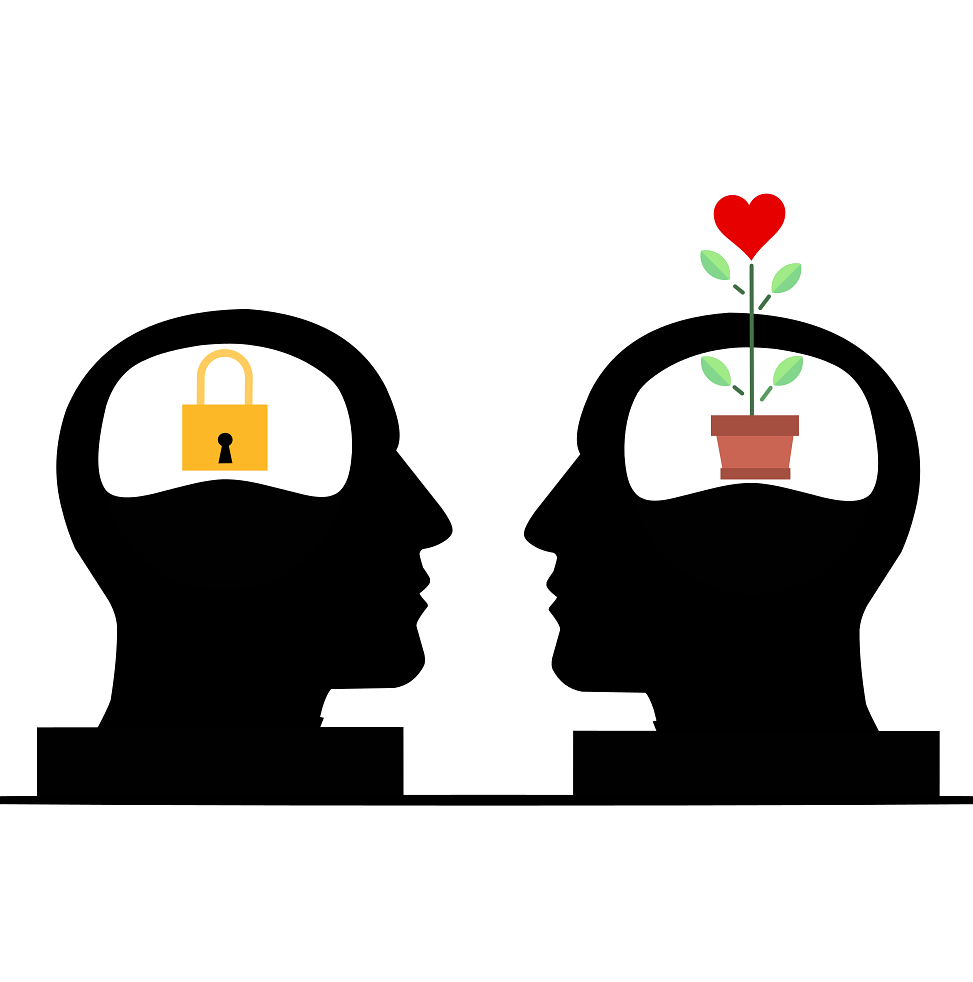
Instead, they are met with harsh words, almost like a slap to the face: “Why are you acting so mindlessly? Why are you behaving this way?” It’s okay to be not okay. This belief must be instilled in every individual experiencing mental health challenges. Just as physical health is important, so is mental health. Yet, many people suffer in silence—held back by stigma, fear, or lack of knowledge. Awareness can change this. It replaces fear with understanding, silence with courage, and hopelessness with hope. Awareness about mental health removes the mystery. Instead of wondering, “Why am I like this?” people understand the reason and realize that healing is possible. With early treatment comes faster recovery. Awareness stops self-blame. Mental illness is not weakness—it’s an illness, and like Physical illnesses gets sympathy, attention, support, and open discussion. Mental illnesses, on the other hand, are often met with fear, shame, and silence.
This difference is heartbreaking and concerning. The stigma and misconceptions about mental illness remain a problem for the families. It is a stumbling block in seeking and receiving support. The belief persists that individuals with mental illness are violent and dangerous. The fact, however, is that the percentage of people with mental illness getting violent is not more than the percentage of individuals with no mental illness getting violent. When a family member shows symptoms of mental illness, his/her erratic behaviour is initially resented by other family members due to ignorance about the illness. Just imagine you have a fever and a headache, and instead of care, your family member says: “Why are you lying down? You have no manners. Get up, go to school, office, or shop. Do your responsibilities. You’re wasting your time. You’re so lazy.” Can you really imagine saying this to someone suffering from a fever? Not at all. In such a situation, we immediately tell them to rest, stop them from going to study or work, and do everything possible to make them feel better and comfortable.
Mental illness is an illness, like any other; it can be treated and healed. When a person understands their mental illness, they can explain it better to family, friends, or teachers. This makes it easier for others to support them with empathy instead of judgment.
Mental health awareness not only helps individuals—it heals families, strengthens communities, and builds a healthier society. Just as the government raises awareness about dengue with posters in every street during peak season, mental health awareness should be given equal importance. Messages in simple and local languages should displayed across schools, offices, colleges, and public spaces—normalizing conversations about mental illness and breaking the stigma surrounding it. If people learn to notice early signs—like long sadness, unusual fear, withdrawal from others, sleep changes, or sudden aggression—they can seek help before the illness grows severe.
In India , the family is the backbone of caregiving for a person with mental illness. Family caregivers of the persons with mental illnesses form a key support system in our country. In the absence of adequate mental health infrastructure, family caregivers take on multiple roles at providing care for persons with mental illnesses. Family caregivers are neither superman nor robots. They get tired, they have emotions, likes , dislikes don’t expect them to be like saints. They do not have unlimited funds They are not trained and do not have solutions for all the problems. They also get older day by day and cannot be there at all times. Family caregivers suffer substantial burden as a result of the caregiving role and need help from mental health professionals.
Unfortunately Mental health treatment, specialized therapies, and counselling are often very costly. Because of this, middle-class families are unable to provide these services to their children and are forced to rely only on medicines instead of first trying therapy or counseling. The government should take steps to make these services more affordable and accessible for all. Yet, while we can find affordable treatment for physical illnesses in government hospitals, when it comes to mental health, therapies and counseling are so expensive that ordinary families simply cannot afford them. Parents are unable to give their children the counselling they need. Patients are forced to depend only on medicines because therapy is out of reach. This is not just a health issue—it is a social issue. It affects families, schools, workplaces, and our entire society. I appeal to the government to make counseling and therapy affordable, so healing is possible for everyone. To establish low-cost or subsidized therapy centers in schools, colleges, and community hospitals.To include counseling and therapy under health insurance coverage, not just medication. Mental illness is rising so rapidly that it seems to be the next epidemic in India. And unlike other diseases, most people suffer silently—because of stigma, fear, and lack of awareness. Mental health is as important as physical health, and together we must demand affordable treatment.